Home › Mustard allergy scanner
🟡 Mustard allergy scanner app
Scan any food barcode and know in seconds whether it contains mustard — under any of its 6+ label names. Free and independent: no ads, no sponsored products, an honest “Unknown” when the data is thin.
How it works
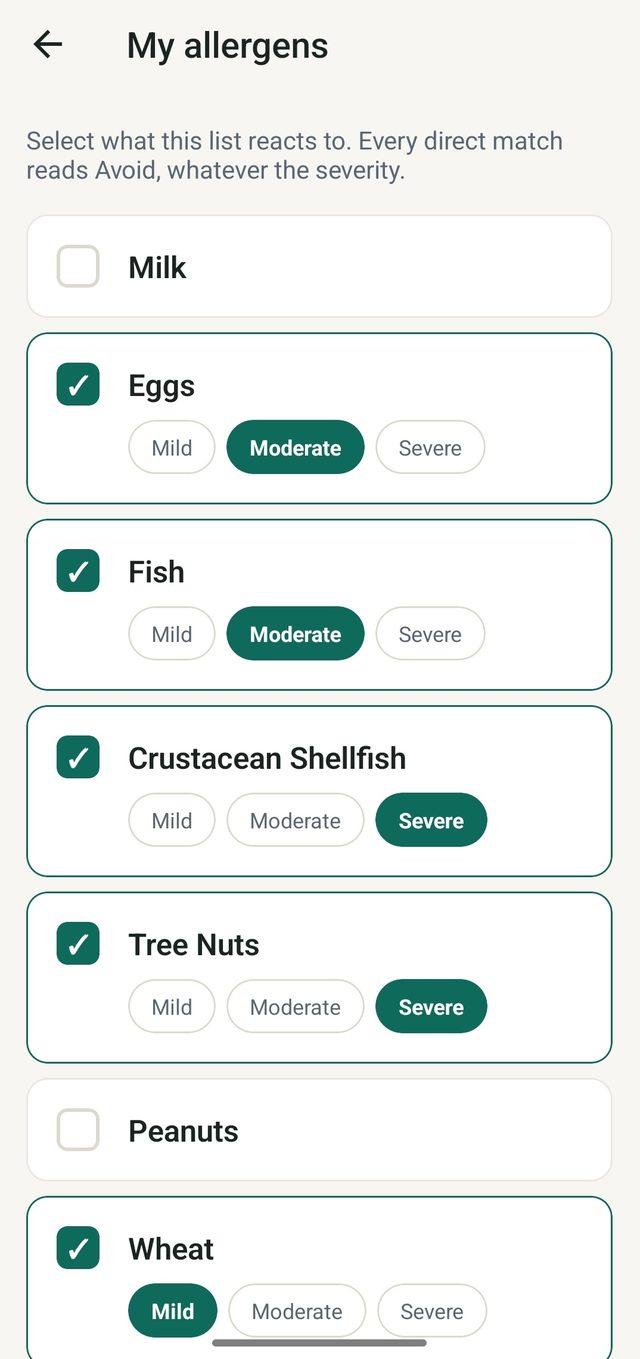
1 · Set your profile once — pick mustard (and any other allergens) with optional severity per person in your household.
2 · Scan the barcode — Scallergy checks the ingredient list against every mustard label name: mustard seed, mustard seeds, and more.
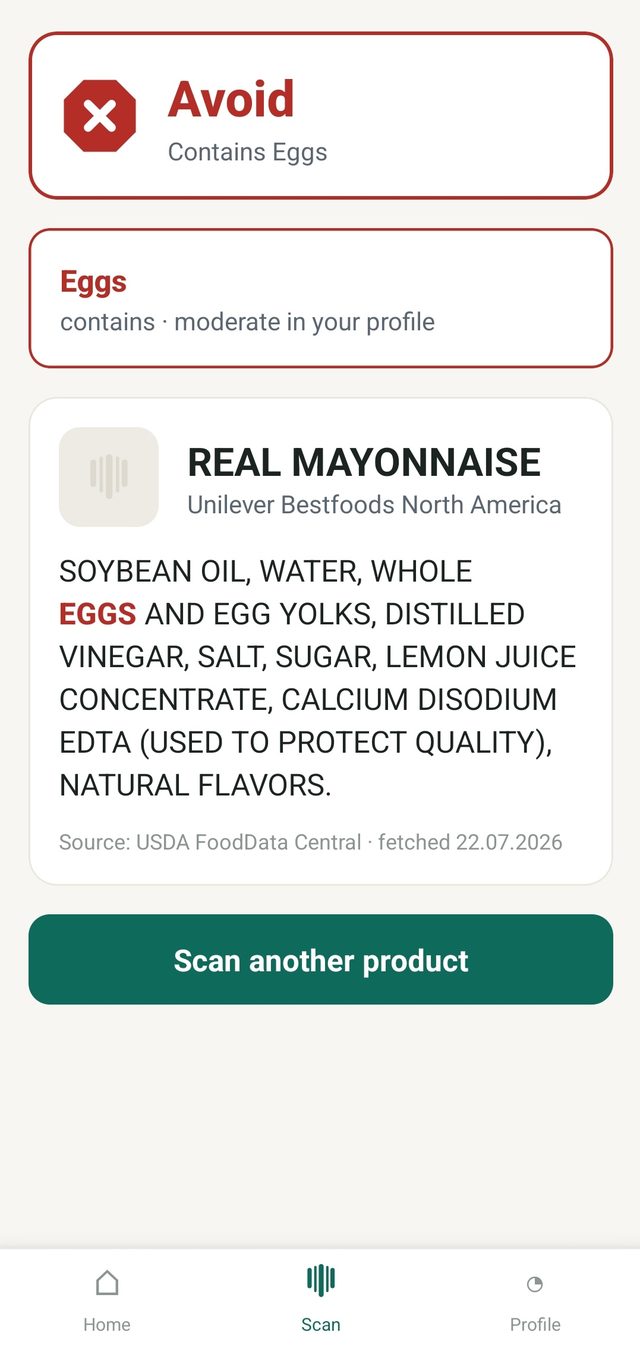
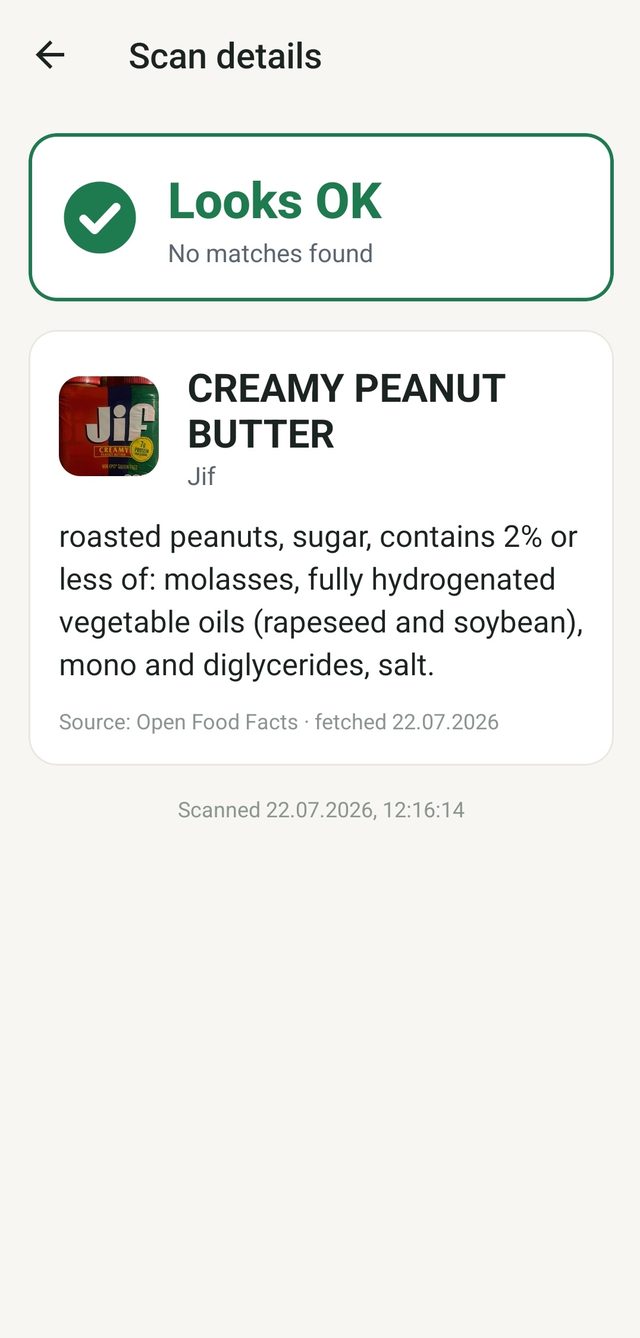
3 · Read one clear verdict — Avoid (it's in the ingredients), Caution (may-contain warning), Unknown (we say so instead of guessing).
Get the mustard allergy scanner
Android beta — free, takes under two minutes to set up.
Get Scallergy on Google PlayIn closed beta? Join here first. iPhone? Get it on the App Store.
What it checks for
The exact label names the scanner matches for mustard — see the full Mustard allergy guide for where each hides:
Frequently asked questions
How does the mustard allergy scanner work?
Point your camera at any food barcode. Scallergy looks the product up (USDA FoodData Central, Open Food Facts, and community submissions), checks the ingredient list against 6+ mustard label names, and shows one clear verdict: Avoid, Caution, Looks OK — or an honest Unknown when data is thin.
Is the app free?
Yes — Scallergy is free, independent, and has no ads. No brand can pay to look safer.
Can it guarantee a product is safe?
No app can. Scallergy is assistive: it shows its data source on every product, says Unknown honestly, and you should always check the printed label and follow your allergist's advice.
Scallergy is assistive, not medical advice — always check the printed label and consult an allergist. Data sources.